Management of Pregnancy -From First Booking To Postpartum Care


 Apple Podcasts
 Spotify
 Pregnancy is a common and often straightforward physiological process—but it also has the potential to become complex, requiring careful clinical assessment and timely escalation.
In this episode of Aussie Med Ed, Dr Gavin Nimon is joined by Adelaide-based obstetrician and gynaecologist Dr Allison Munt for a comprehensive discussion on the practical management of pregnancy, tailored for medical students and general practitioners.
Together, they explore the continuum of care from the initial GP presentation through to delivery and the postpartum period, with a focus on clinical reasoning, risk stratification, and shared decision-making.
This is approved for 1 hour RACGP CPD - accredited activity
to complete - click on registration link after listening
remember to provide RACGP member number and email
registration link
Key topics include:
- What constitutes a low-risk vs high-risk pregnancy, and how this influences models of care
- The role of the GP in the first trimester, including history, examination, and initial investigations
- Current approaches to screening, including non-invasive prenatal testing (NIPT) and morphology ultrasound
- Identification and management principles for common complications such as gestational diabetes, hypertensive disorders of pregnancy, and fetal growth restriction
- Monitoring strategies in the second and third trimesters, including when additional imaging or CTG assessment may be indicated
- Considerations around timing and mode of delivery, including induction of labour and caesarean section
- The importance of postpartum care, including pelvic floor rehabilitation, breastfeeding support, and perinatal mental health
This episode emphasises a balanced, patient-centred approach, acknowledging that pregnancy care varies depending on individual circumstances, patient preferences, and local resources. It also highlights the importance of multidisciplinary care involving GPs, obstetricians, midwives, and allied health professionals.
⚠️ Important Disclaimer
The information discussed in this episode reflects the clinical experience and perspectives of the speakers and is intended for educational purposes only. It does not constitute medical advice and should not be used as a substitute for independent clinical judgment.
Management of pregnancy and obstetric conditions may vary based on local guidelines, patient factors, and evolving evidence, and clinicians should refer to current recommendations and consult appropriate specialists when required.
🎙️ Proudly Supported By Our Sponsors
Aussie Med Ed is independent and free — made possible by these amazing Australian organisations.
- Heidi Health — AI medical scribe built for Australian clinicians. Finish clinic on time and keep your focus on your patients. Visit Heidi Health
- HealthShare — Australia's health information and referral platform, connecting GPs, specialists and patients. Visit HealthShare
- Avant Medical Defence Organisation — Protecting over 80,000 Australian healthcare professionals. Visit Avant
- eMedici -an Australian-made medical education platform for med students, junior doctors, and IMGs. Visit eMedici.com/MEDED
- Better Medical- GP clinics across QLD, SA, VIC and TAS – offering you the freedom to practise your way, backed by a strong support network. Visit BetterMedical
Thanking the organisations that make Aussie Med Ed possible. Visit our full Sponsors page
00:00 - When Normal Pregnancy Turns Risky
01:14 - What Aussie MedEd Is About
02:35 - First Antenatal Visit Essentials
06:47 - CMV Risk And Prevention
09:15 - Referral Timing And Models Of Care
12:13 - Exams Urine Testing And Diet Advice
17:28 - Gestational Diabetes Screening And Treatment
21:20 - Supplements And Exercise In Pregnancy
26:34 - NIPT Carrier Screening And Scans
32:33 - Third Trimester Surveillance And CTG Use
38:47 - Induction Timing And Shared Decisions
44:44 - Elective Caesarean And Pelvic Floor Choices
47:08 - Physio Midwives And Postpartum Gaps
53:58 - Training Pathways And Closing Notes
Dr Gavin Nimon:
Pregnancy, it's common, it's natural, and yet it can turn complex in a heartbeat. So what should a straightforward pregnancy look like? When should a GP relax and when should alarm bells ring? What tests actually matter and when do you induce? And how do you balance birth plans with real world risk? To today? Aussie Med Ed. We are cutting through the noise on the management of pregnancy from their very first booking right through to delivery and postpartum care. Joining me today is obstetrician Dr. Alison Munt, and we are getting practical. We're talking referral thresholds, gestational diabetes, hypertensive disorders, growth restriction, and what gps and students really need to know when pregnancy stops being low risk. If you ever wondered, am I over referring or am I missing something? What's actually a standard practice in 2026. This episode is for you. Welcome to Aussie Med Ed. Good day and welcome to Aussie Med Ed. The Aussie style Medical podcast a pragmatic and relaxed medical podcast designed for medical students and general practitioners where we explore relevant and practical medical topics with expert specialists. Hosted by myself, Gavin Nimon, an orthopaedic surgeon, this podcast provides insightful discussions to enhance your clinical knowledge without unnecessary jargon. I'd like to start the podcast by acknowledging the Kaurna people as the traditional custodians of the land on which this podcast is produced. I'd like to pay my respects to the elders, both past, present, and emerging, and recognizing their ongoing connection to land, waters, and culture. I'd like to remind you that all the information presented today is just one opinion, and there are numerous ways of treating all medical conditions. It's just general advice and may vary depending upon the region in which you're practicing or being treated. The information may not be appropriate for your situation or health condition. And you should always seek the advice from your health professionals in the area in which you live. Well, joining to me today is Dr. Alison Munt, a specialist obstetrician and gynecologist practicing in Adelaide and based to Adelaide Obstetrics and Fertility in Goodwood. She completed her obstetrics training in 2013 and her approach emphasizes the importance of informed consent and individualized care. For medical students and gps. Allison brings a wealth of experience in the full spectrum of pregnancy management from antenatal care through to delivery and postpartum support. Welcome, Allison. Thank you very much for coming on Aussie Med Ed.
Dr Alison Munt:
Thanks for having me.
Dr Gavin Nimon:
worries.
Speaker:
Perhaps could start off by asking you to describe the typical presentation of a healthy Singleton pregnancy.
Dr Alison Munt:
No problem. So I guess from my perspective I typically see patients for their first antenatal visit by about 10 weeks. But often these patients have been seen by their gp usually between about six to eight weeks for their initial antenatal visit. And the first visit with the GP is important for a number of reasons, and they usually will rock up with an idea about their gestation based on their last menstrual period. But obviously that visit is super important to determine their estimated due date and whether that can be calculated from their last menstrual period or whether they need a dating ultrasound scan. But the other reason why that visit's Im important is for basically looking at models of care for that patient and what's suitable. So it is good for the GP to determine that and to do that they should really be looking at the comprehensive health history of her, of the patient and also examination just to see if it's a low risk pregnancy or a high risk pregnancy, what the patient's preferences are for ongoing pregnancy care in terms of models of care. calculating the due date, which is very important. And obviously examining the patient, which at that stage is just a general examination for general wellbeing. And then routine health testing as well. Just screening for some initial blood tests that are really helpful to have when I see a patient that perhaps for their first visit at 10 weeks. So with the history, like I said, the first thing that you're probably wanting to determine is how far along the patient is. So determining the due date is about determining the first day of their last menstrual period. And most women these days planning a pregnancy will have that really reliably recorded in their tracking app, which has been very helpful over the years to have that. You wanna also determine their past obstetric history, which when you're trying to determine risk factors. Just a general medical history or even family histories are very helpful too. And then substance use is something that you'd want to determine at that first visit as well. When you are looking into substance use with the patient, obviously it's about educating at that point probably as well at the first visit. It's very important. And, referring on to different programs might be helpful for women who perhaps are smokers or or drinking alcohol at that point. terms of clinical examination as well the, one of the most important things is determining BMI and that's a really important risk factor to to help determine what best model of care for the patient is, and then blood pressure as well. So booking blood pressure is key in pregnancy. Just to determine how that tracks from there. And even something as simple as white coat hypertension at such an early gestation is really important to determine risk as well. It's probably the case that gps tend to be seeing patients at an early stage where you're not going to be able to palpate a fundus of the uterus. However, if we were beyond that first trimester, that would be something that you could perhaps do or auscultate a fetal heart or if you were lucky enough to have an ultrasound. Obviously an ultrasound at that point is a good idea. A general examination of the cardiovascular system's important, and then a breast examination probably at that point is always, something that you should consider at that early stage when you go on to consider some investigations. routine blood tests that we would expect, at a first visit would be pretty simple things, like a full blood count to look at. Hemoglobin and platelets, we would like to know what the ferritin level is or iron studies. A very important test is obviously the blood group and the antibody screen which we would want to have done at this early stage, and then some viral serologies. And the routine viral serologies that we do include Rubella Syphilis, hepatitis B, C, HIV as well. And depending on risk, and this is something that doesn't necessarily need to be done at this stage. We may screen for other infections like CMV as well which can be important as well.
Dr Gavin Nimon:
On those points, What are you looking for on the breast examination?
Dr Alison Munt:
I guess it's probably just determining pre breastfeeding, like if we are anticipating moving into lactation and breastfeeding, if we have a baseline examination to know are there any pre-existing lumps or bumps because as someone moves into that lactation stage and breastfeeding stage, obviously we expect to have some lumps and bumps. So it would be, it's always good to just have a baseline examination'cause it's easy at that early stage to get an ultrasound and just manage what needs to be managed or at least understand what's going on rather than leaving it till later in the
Dr Gavin Nimon:
And And what concern about CMV, I mean, I have very poor recollection what that involves and how you catch it
Dr Alison Munt:
the risks of acute primary CMV, particularly in the first trimester, there's significant risks to the fetus with that. you catch it from So toddlers basically. So invariably parents who already have toddlers probably have had exposure to it, to be honest. Or usually caregivers of toddlers. So people who work in childcare teachers who work in primary. So they're the people that are probably most at risk of CMV. And I guess preventing CMV is a really about hand hygiene, not sharing, spoons or cutlery with your toddler. And it's one of those things that we don't necessarily routinely screen people for it because of the difficulty in interpreting results or managing results. and doing anything about it, I guess. But for the higher risk people who we would like to know, are they immune or, do they have active IGM? Then we would do that because it might, change outcomes in terms of counseling. Moving forward in the pregnancy, given the risks of acute primary CMV, but yeah, it is, it's a difficult one the recommendation at this stage is not to routinely screen.
Dr Gavin Nimon:
And that can affect brain development predominantly. Was it?
Dr Alison Munt:
Yeah, so it's basically torch syndrome. Yeah, developmental issues, microcephaly and yeah, just generally sort of poorer outcomes for the baby. So, Another association is hearing deficits and visual deficits as well.
Dr Gavin Nimon:
Now this is the pathway that a GP would go down when they first see a patient who's pregnant. But when, do they refer to an obstetrician?
Dr Alison Munt:
so this is where I guess the gps helpful at helping the patient determine what model of care the patient wants, because there's certain different types of models of care, which includes. GP shared care then, private versus public care and then midwifery led care through the public system. there's not really a role for midwifery care privately at this stage, or there's gaps there at the moment in terms of how that's supported by Medicare. But once the GP, I guess, can determine risk because a high risk pregnancy we would encourage medical care. And that could either be through public or through private. So most patients will I guess present to their gp, at the, that six to eight week mark. And at that point, we wanna, as long as we've got some reliability behind determining the due date there may be a role for the GP in terms of also determining the intrauterine nature of the pregnancy. So if there were any concerns at that point around bleeding or anything that just wasn't quite right or pain then it would be the role of the GP to make sure that an ultrasound was ordered and some bloods were ordered to confirm an ongoing intrauterine viable pregnancy. So in the setting of a threatened miscarriage that GP would on refer in a more urgent setting, I guess, to women's health unit, either at, in a public setting or to a private obstetrician who usually would make time to see that patient more urgently. To manage what needs to be managed. but in the setting of a, a healthy well pregnancy that's determined to be intrauterine, no other major concerns then that person may not be seen again in public until after the first trimester. So often it would be the role of that primary caregiver or GP to determine or to organize those first trimester screening tests. however, if that patient chooses private obstetric care, we would normally like to see the patient more closer to the 10 week mark, where we can counsel the patient around some of those early first trimester screening tests that can be done as early as the 10 week mark In terms of midwifery care, that sort of level of triage usually occurs after their first booking visit. In the public sector after they've seen and had seen a midwife, and they usually get an extensive history taken. And then depending on the preferences of the patient and suitability of the patient, they'll be triaged either for medical care or for midwifery group care. And that's usually how that sort of evolves.
Dr Gavin Nimon:
So let's say the patient sees the gp and the GP determines it's a low risk pregnancy. is a a per vaginal examination required nowadays, or can a lot of that be done through a ultrasound and other investigations? And also what's the role of also urinalysis as well looking for? Abnormalities in that
Dr Alison Munt:
yeah. Well just going back to I guess the vaginal examination, I guess there's some in indication, depending on age of the patient. And last STI check to, to do that sort of screening that we recommend in, women. And similarly to make sure that they've had HPV testing or cervical screening. So they're two important things that usually we would expect to be done either in a pre-pregnancy setting or if not done in that timeframe, in that first trimester. however a general vaginal exam wouldn't necessarily be indicated. In terms of assessing though with ultrasound, we would normally, for that first ultrasound, do a trans vaginal ultrasound as that's more accurately able to determine. Um, gestation and get more reliable images and measurements of the crown rump length. That would be something to perhaps expect with your first scan, particularly if it's before that sort of, 10 week mark. The second part of your question, Gavin, was about urinalysis. So we would normally send, as a routine, which I think I didn't mention was a midstream urine at the first visit. That's really just as a baseline looking for asymptomatic bacturia, 'cause we have a low threshold for treating any bacturia in pregnancy as it can escalate and become something more overt more easily. We do tend to treat with antibiotics. So we would do that at a booking visit. And then more often if we had a patient who was perhaps more high risk for UTIs or has a history of recurrent UTIs. But I wouldn't routinely these days be screening for proteinuria, which is something that in the past has been something that we used to do. We are more inclined to send a protein creatinine ratio for patients who are at risk of any renal issues or blood pressure issues or yeah, anything we are concerned about. But dip, sticking the urine isn't something I do day to day in my private practice. And yeah, I mean, it's probably something we still do though in a public setting for presentations, but more probably to look for if someone's presenting with urinary symptoms for nitrites more than
Dr Gavin Nimon:
right. So it sounds like the first, generally the first trimester is pretty easygoing. It's more of a checkup and screening. I presume there's also some advice you'd give about diet as well. You've already talked about the importance of not smoking and drinking alcohol
Dr Alison Munt:
the general advice is that no alcohol is safe. But, I think what you don't wanna do though is add too much anxiety to patients particularly, I mean, at that first visit a lot of patients might have drunk in the first trimester, inadvertently. So I'm not gonna sit there and sort of be like, oh, that, that that's terrible. What have you done to the pregnancy?'cause it's so common for people to, to inadvertently drink in their pregnancy. And we I haven't over my 15 years in private practice found any issues with that, if it's a one off drink. But yes. We do advocate that no alcohol is safe Oh, I was just gonna say, 'cause I guess that goes back to the nutrition part of it as well because, historically we used to weigh patients every visit as well, which is not something that I would do anymore either. For the same reason. I think it adds anxiety to patients, watching their weight go up. And generally it's patients who are eating, healthily and eating a balanced diet. But the nature of pregnancy is that you are gonna, most likely, and most people will gain weight and the amount of weight that you gain is really dependent on your starting BMI and people, with A BMI over, 40 it, in fact I'll expect it to lose weight often. So it's such a broad range and it's so individualized that if I have patients that generally eat a balanced, healthy diet, I'm not gonna be on their back about their weight. But I'll be supportive of people who are worried about gaining too much weight and, we have great women's dieticians and obviously weight gain in pregnancy is probably important from a, risk of gestational diabetes. But once again, that's where we get people to dieticians to sort of manage that, that risk if we needed to.
Dr Gavin Nimon:
On that basis, what is the risk of gestational diabetes? What percentage of women will get it? And how do you actually treat it?
Dr Alison Munt:
So it is probably, more common than you think. And we would probably diagnose around, like 10% of our pregnancy population, it can be diagnosed as early as the first trimester. Right through to the usual screening test for low risk patient, which is patients, which is at 26 to 28 weeks. there's recent screening has changed. As of last year. There's new criteria based on what's the ADIPS recommendations. And so it's a bit harder to get diabetes these days, which patients appreciate. So the fasting and one hour and two hour levels have increased, which is a good thing. And I think the changes reflect that. We were diagnosing it a lot and we found that probably, the diet that people then took on with the diagnosis was quite restrictive and perhaps having perhaps adverse effects, on the pregnancy, not eating enough. And how that impacted the pregnancy. So the criteria has changed, which is good. But what we do recommend in people with risk factors and risk factors include previously having diabetes weight family members who have had diabetes. We would screen usually at the sort of 14 to 16 week mark with a glucose tolerance test. we also are pretty routinely doing a HbA1C on most patients just because it's an easy test to do with the booking bloods, which I didn't mention and we wouldn't necessarily expect the GP to do. But I have noticed most patients rocking up for their visits with a HbA1C, which is helpful because it would trigger a change in management if it was at a certain level. So like I said. The HbA1C the GTT at 14 to 16 weeks in the higher risk patients for low risk patients of routine screen at the 28 week mark. And if, and when we diagnose it, we would refer the patient for diabetes education and dietetics input about a diabetes diet. And most often, and a lot of the time, these women can manage their blood sugar levels with diet. They will be encouraged to monitor their levels basically four times a day. So fasting and then postprandial three times a day. And as long as they maintain certain levels, diet will be the key. And that's a lot of the time, that's what it is. Sometimes patients will need medical treatment and that can be metformin. Or insulin. And that sort of depends on the patient preference. And we'll have the support often of our obstetric physician. We have an obstetric physician in our rooms who sort of helps us if we need it.
Dr Gavin Nimon:
Right. Well, obviously the person who is at high risk or is developing gestational diabetes will go down the path of dietary advice, but what about for the average person? What other advice would you give, like for folate, iodine, vitamin D, other things you might suggest as well?
Dr Alison Munt:
Yeah. So there's definitely some supplements that we recommend and some we recommend pre-pregnancy as well. And most people are familiar, obviously with the recommendation around folic acid to reduce the risk of neural tube defects. And we sort of, yeah, encourage or recommend that for at least a month preconception, and then throughout the first trimester. And we also recommend iodine as well. So most pregnancy supplements will come as a package with the 500 micrograms of folic acid and then the iodine to go with that. Similarly, the advice around vitamin D has changed a little bit. I mean, I think most people are vitamin D deficient, to be honest. Rather than screening these days, the recommendation is just to have supplement vitamin D. I think it's about 400 international units, and once again, that's usually what comes in these pre-pregnancy vitamins. So that usually includes the vitamin D. We'd normally do some targeted screening for things like iron. And so sometimes women will need to supplement early in the first trimester. Their iron. Other things like just, considering people's diet on an individual basis, whether calcium is adequately covered in their diet.'cause we would replace that if we had concerns about that. Similarly, for vegans or people yeah, who don't eat much meat. We are looking at things like B12 as well that often might need to be supplemented. So there are a few additional things. Um, I'm thinking, there's a lot of noise at the moment around things like choline. I think a lot of patients ask about that. In a balanced diet, we shouldn't necessarily need to supplement choline. However, once again, often that does come in the pregnancy supplements. And I think the one I forgot to mention as well that is important is Omega or DHA. We do routinely screen for that now. There's been, I think, yeah SAHMRI have run a trial recently looking at omega levels and risk of preterm birth. And we know that certain levels are recommended in pregnancy. So with our, the first trimester screening that I do, I'll look at omega levels to see if people need to take an Omega supplement as
Dr Gavin Nimon:
Right. The other thing too I was reading up about was the importance of exercise, although it sounded like hard work.'cause I think the recommendation is for the average person is 30 minutes of exercise, three to four times a week. But when you're pregnant, they're suggesting at 30 minutes every day, which on top of everything else you're doing. How can you fit all that in?
Dr Alison Munt:
It's too much. I mean, I think once again, it goes back to adding more anxiety and there's so much anxiety or things to be anxious about for if you're a new time mom. I wouldn't routinely be encouraging people to do anything different to what they normally do, particularly in the first trimester where they do not feel like doing anything. However I think that advice is generic advice, probably based on. The obesity epidemic and perhaps, yeah, just trying to get people fitter for their pregnancy and delivery. But from my perspective, I wouldn't discuss, that level of exercise or change people's exercise regime outside of what they normally do. In saying that there is some benefits to things like pregnancy, Pilates, and, just staying mobile and, making sure you, you're stretching and things like that we know can help for labor and just put someone in a good position for their labor and also for their recovery. So as I go in the pregnancy, I would figure out who might be suitable for that or, if that's something that they would be looking at doing. But I think staying active, doing the normal level of activity you would normally do is what I would recommend. And obviously just reconsidering any contact sports as you enter the second trimester as well, just for obvious
Dr Gavin Nimon:
Yeah. And when does morning sickness, the worst? Is that in the first or second trimester?
Dr Alison Munt:
Look, I guess morning sickness is probably peaking around that eight week mark as your hormones are peaking. And most women will find that they will be free of those symptoms by about 16 weeks, and it just starts to improve, between that eight and 16 week mark. A small percentage of women have persisting nausea in pregnancy throughout the whole pregnancy, which really is unfortunate because yeah it's a long time to feel sick. But there's obviously things that we can do to try and manage that and alleviate those symptoms but that would be the exception most people would find. Yeah, that 16 week visit, everyone's feeling pretty good. Not too big, not feeling really pregnant anymore. But yeah, it's just the, that very few number of people that have that persisting nausea.
Dr Gavin Nimon:
So what's the monitoring stage after that? do they have to have further follow up ultrasounds or other tests done as well?
Dr Alison Munt:
Yeah, and I think I've haven't mentioned a few of the earlier tests that are really important, is obviously the non-invasive pre-natal tests, which is the 10 week blood tests that we offer now that can look at risk of down syndrome and look at it pretty reliably and more reliably than the traditional combined first trimester screen. Which was the tool that we used to use to, to determine risk of down syndrome or an euploidy in the pregnancy. Now we have a full genome, non-invasive prenatal testing, so it can look at a full carrier type of the baby. So it can pick up any rarer chromosomal abnormalities as well as look at risk for down syndrome. It looks for sex chromosome abnormalities, so things like obviously like Turners or Kleinfeld's, we can look at that. And for people who wanna know the sex of their baby, that can be determined at 10 weeks, which is amazing so that I know it is craziness. So that is as early as the 10 weeks. The test that I would normally do, the results are available within five days of that. And then we also can't forget about the carrier screening testing that we can do now. Genetic carrier screening, testing. Which I also offer all my patients in the first trimester, but GP's can offer that and the earlier it's offered and done the better.'cause it takes a few weeks for the results to get back and it's probably a better test to do preconception. And there's now a three gene carrier screening test that's offered by Medicare bulk billed. There is an extended genetic carrier screening test that we can offer as well, which I always offer that looks for about 600 recessive genes. but that test is still about a thousand dollars. So not many people are doing it and probably a better one to reserve for preconception, just given the counseling that can be involved with any abnormal results. But the three gene test is definitely worth doing, and that involves looking for the cystic fibrosis gene the spinal muscular atrophy gene, and the fragile X gene. So three recessively inherited conditions. So that's always helpful to have as well when I see patients for their first visit.
Dr Gavin Nimon:
so those tests are done just as blood tests off the woman that's pregnant. Is it? The ones looking for the infant or the fetus carrying a abnormal gene as a blood test as well from the woman or, how's that done?'cause in the past it used to be amniocentesis, but that must be out the window now.
Dr Alison Munt:
No. So essentially the non-invasive prenatal test is detecting fetal DNA. So it, that's, it is the fetal DNA, that's picking up. And the reason you can't do it before 10 weeks is because there's not enough fetal DNA to detect. So we wait till 10 weeks and that tends to be the right time and we have enough fetal DNA so that we can get results. So that, that is essentially, yeah, looking at a full genome of the baby. We can offer that at that early stage. but when we are looking into morphological abnormalities that's when we, even in the setting of doing the NIPT test, we would still recommend a first trimester or, 12 to 14 week scan as an early morphology. Because that's, sensitive at picking up morphological abnormalities even at that early stage. But it's always followed up with the 20 week morphology scan. Which is where they can finally sort of have an assessment of things like the the heart and the spine, which can't be done as early as 12 or 14
Dr Gavin Nimon:
Right. So that means there's a scan done by the obstetrician or GP just as routine ultrasound scan of the 10 week, and then there's two morphological scans at, did you say 14 weeks and 20 weeks? Is that correct?
Dr Alison Munt:
Yeah. So I would normally do 13 weeks if that's what I do but it could be as early as 12 or as late as 14 to 16. And that's just, like I said, I think the importance of that is being, potentially picking up some abnormalities in an earlier stage than leaving it till 20 weeks. But then the final scan at 20 weeks is still performed, like I said, to get the final views of the heart and the spine
Dr Gavin Nimon:
Right. Just going back a step, we are talking about fetal DNA in the woman's bloodstream. Has that always been known? Because I wasn't aware that occurs. I was considered the placenta as being almost like two different areas Meeting and yeah, those transfer of oxygen and nutrients, but not as much DNA. And if that's the case, what stops the baby being rejected by immune system as well
Dr Alison Munt:
So by the fetus, I guess, I mean the package of the fetus and the placenta. and this is where the NIPT isn't a hundred percent reliable, so you can have some mosaic, abnormal genes where the placenta's involved, but it doesn't involve the fetus, and that can be difficult to interpret on the NIPT (non invasive prenatal test) And that's where even with A high Risk NIPT result, we would still do a diagnostic test. So it's considered an advanced screening test. So it's still not considered to be absolutely diagnostic. And if we did have a high risk result because of that, small chance of mosaicism or the placental cells, then we would refer for an amnio, which is considered a diagnostic test
Dr Gavin Nimon:
Right. And so it's still done. The amniocentesis then is
Dr Alison Munt:
we still do it. And that's because we need, sometimes if we have concerns around an aneuploidy, we might need to look at a microarray, which you can't get from the non-invasive prenatal test. So that's looking at whole chromosomes. Whereas, if we are concerned about genetic abnormalities, we need to go deal, delve a bit deeper, and that can only be done through a microarray. Chromosomal assessment, which can only be done through diagnostic testing, which is by taking fluid from around the baby. Or alternatively, you can do the chorionic villus sampling, which is where you take tissue from the placenta.
Dr Gavin Nimon:
And so after the 20 week period, there's there's no further ultrasounds required unless, an abnormality develops.
Dr Alison Munt:
Yeah. depending on risk factors, in my practice, I scan everyone every visit because we have the technology and it's so useful for me to, confirm presentation and also to do a sort of quick growth assessment or estimated fetal weight assessment. But obviously in the setting of the public hospital or midwifery led care or GP shared care, you're not gonna necessarily have that at your fingertips, but you would measure some Symphysis fundal height (SFH). You would also get an idea about what you know, size and whether you thought baby was small or large for gestational age. And that might trigger a third trimester ultrasound to get a better idea about size of the baby. Keeping in mind that ultrasound is plus or minus sort of 20% at being accurate for determining estimated fetal weight. So it's not a hundred percent reliable by any means. And then also there, there could be patients with other risk factors that would trigger a formal scan being ordered to look for estimated weight or AFI (amniotic fluid index), so fluid around the baby and. Umbilical artery dopplers as well. And that could be if someone had a risk factor like hypertension or diabetes, any autoimmune conditions any previous history of an intrauterine growth restriction. So that would be a trigger for a, definitely for a third trimester scan. And often it's more than one because it's more interval growth rather than a one-off growth assessment because obviously there'll be big babies and small babies and it's more about how babies track in that third trimester. As long as they're tracking along the appropriate center line for them, then that's what we wanna see. So it'll often be a couple of scans if there are any concerns around fetal growth.
Dr Gavin Nimon:
Right. What about those other tests too? this must be showing my age. You probably don't even have them anymore. Those old fashioned sort of looked like bells that you put up to the abdomen and try and listen to the fetal of heartbeat.
Dr Alison Munt:
A pinard. Yeah. So I remember starting training and I used to have a couple of of my, my consultants still using Pinards when I started training. We've come a long way. We know
Dr Gavin Nimon:
and fetal ECGs. are they called CTGs what are they?
Dr Alison Munt:
CTGs, cardiotocograms, so yeah, we still use them a lot actually and it helps us determine fetal wellbeing and we do it both antenatally but also intrapartum. So it's a, it's the most important tool intrapartum to sort of determine the fetal wellbeing. So any pregnancy or labor where we have concerns around that would get fetal monitoring, which involves the CTG. And then some people, antenatally there might be an indication for an antenatal CTG, just as another sort of check off for fetal wellbeing. And that could be simple as a mum who's got concerns around fetal movements. And usually at 20 to 24 weeks I'll educate patients about, what to expect so that they know, what to look for. But once again, that's another sort of point of anxiety for a lot of people. And in a low risk pregnancy I don't necessarily encourage people to count kicks or count movements on a daily basis because that's just can do your head in. And everyone will have a different experience with their baby's movements and it's really what they know to be normal for them. And then if it deviates from that, that's when we can sort of intervene to reassure with the CTG. So that would be one of the primary indications for an antenatal CTG. But another reason would be if we've got concerns around growth and we are doing regular growth scans, that would be another sort of thing that we'd do in between just to make sure baby's happy.
Dr Gavin Nimon:
So What are the things that really trigger your concerns to watch out from the second trimester versus the third trimester then?
Dr Alison Munt:
Yeah, well, I guess, look it's so dependent on the individual patient and whether they have underlying risk factors. So I guess I've already in the first trimester determined, risk for things like preeclampsia at 12 weeks, another test that we can do where we can determine the patient's risk of developing something like preeclampsia. And the way we do that is by looking at placental growth factor which is just a placental protein that we routinely measure, in the first trimester. So it's a measurement that We've had available for a while. We use that along with mean arterial blood pressure and a few other characteristics of the woman, including like BMI, history of previous pregnancy and then family history to determine a risk of developing preeclampsia later in the pregnancy. So that sort of testing that we do now routinely at the 12 to 14 week mark will then change management as well, because often if someone's high risk for preeclampsia, we recommend. Low dose aspirin in pregnancy. So 150 milligrams daily. And we also wanna make sure that they have adequate calcium intake, and if they didn't, we would encourage a calcium supplement. We know that those two things can reduce that person's risk of preeclampsia. It's at that point things like, autoimmune conditions are gonna be a factor that we're gonna be considering as well as increasing that risk. And once again, I've talked about the assessing for risk of diabetes at that mid trimester stage. Also, the third trimester is really about, I guess, monitoring the patient at each visit for things like blood pressure but also for other symptoms as well associated with high blood pressure in pregnancy, including swelling. And obviously things like, headaches and abdominal pain and things like that. But they would be the things that we'd be monitoring along with obviously the size of the baby, which I've mentioned how we would assess for the size of the baby in the third trimester.
Dr Gavin Nimon:
And how often would you see them then in the third trimester? Is it still weekly or is it maybe fortnight?
Dr Alison Munt:
Yeah. So for women in their first pregnancy, once we sort of get to 28 weeks gestation, we normally recommend a two weekly visit. So we sort of escalate the visits at that point.'cause before that there would be monthly visits, but from the 28 week mark, we really wanted to keep an eye on things that. I've mentioned like blood pressure, but also that's when you know the growth of the baby really becomes obvious, where the smaller babies, stand out from the bigger babies. And we expect a certain amount of growth each week, so we should be able to measure that and see that, which is usually around the 200 grams a week. So it's really from that 28 week mark that the two weekly visits are quite important, and we'd normally do that up until around 36 weeks. And then from 36 weeks we would normally see patients weekly until delivery. Depending on when that is, which we don't know, which is the annoying part about my job.
Dr Gavin Nimon:
Yes, the unknown. Of course, that's not always the case.'cause sometimes there's planned cesareans and planned inductions as well. How do you determine which way someone will go? Certainly in a standard simple pregnancy. They've obviously got a few different options and other times in the more complex it might be a bit harder.
Dr Alison Munt:
well, it's generally in a low risk pregnancy with no indication to deliver early, I'd normally base it on patient preference and as long as they make the decision well informed. I guess, a lot of the time in the first pregnancy, a patient who's aiming for a vaginal delivery will also want spontaneous labor. And often that's probably because of misinformation around induction of labor. But in saying that, from my perspective, I think yeah, induction of labor can just be a bit harder for the patient.'cause you're in hospital longer, and as soon as you get to two days in hospital trying to have a baby, it gets a bit of a drag. So I kind of agree and would encourage for a first time mom to perhaps wait for spontaneous labor, understanding that might not come and you might get to your due date and beyond that and it still might not come. And that brings with it some risks that I would want the patient to be aware of because. Essentially the most recent data probably supports 39 weeks as being the optimal time for the baby to be born. So the baby does not need the mum or the placenta anymore beyond 39 weeks. And then we know that risks after 40 weeks, including stillbirth, Meconium-stained liquor (MSL), or cesarean section rates all increased quite significantly. So it's about balancing those things with the mother's or the patient's preference for spontaneous labor and their birth plan. But for women, and I find in their second pregnancy, most women will elect to be induced at 39 weeks 'cause they kind of know what it all looks like. And I think induction is probably a bit more predictable in the second time pregnancy. Because we know that induction will be a lot quicker and we can predict a bit better how the mom's gonna go And she already knows what labor's like. The fear around a failed induction is minimal. The fear around having and, needing an emergency section is minimal. So often that's how it looks. First time waiting for spontaneous labor, making sure they're well informed about the risks of that. Versus a second time mom just coming in and probably locking in a 39 week induction. In terms of risks of induction, I guess I mentioned, the misinformation and it's difficult 'cause there's so much information out there these days and unfortunately I think sometimes there's too much and most people have been pregnant or know someone who's been pregnant. So have an opinion on it and, it can get it very confusing and overwhelming when someone's trying to make a decision. And I find that, even with. Evidence-based advice, people can still get a bit confused and overwhelmed with it, which is understandable, especially if it's your first pregnancy. But yeah, essentially induction of labor's very safe. The risks associated with it would be, failed induction. But, after 39 weeks that's very unlikely hyperstimulation or overstimulating the uterus, but that can be managed very easily. It's not a concern. And it's a very safe option for mum and baby, but probably with an increase rate of pain relief or epidural. And not because it's more painful. And I think that's one of the misconceptions is that it's a more painful experience. I think it's just probably how it brings on contractions. It's just a little bit artificial and it can be a bit more sudden, so it's less of a buildup. Where your body can gradually um, get used to it and it can just be a more sudden thing, which leads to probably more requests for epidurals. But also because you're, you've been in hospital longer, so it just, yeah it's a bit of a mental game labor and I think that does your head in a little bit and therefore you're gonna go down that, give me an epidural path, probably a bit easier. but ultimately, yeah, very safe, A safe option if needed or if wanted.
Dr Gavin Nimon:
about the role of cesareans then? Is that kept as a sort of emergency scenario or when the A delivery is not progressing or is it also still done electively as well?
Dr Alison Munt:
It is definitely done electively and in my practice, and most people's private practice would be offered as a very reasonable, safe option for maternal preference as well. It's 2026. We know we can do cesareans really safely. It's a very predictable outcome and predictable way to have your baby. And it's also a very safe way, but obviously that's taking into account recovery and just understanding what that looks like. But these days that's, a reasonably manageable thing as well. But I, yeah I would say that would be something that most obstetricians these days would offer to anyone who would like to, for instance, they don't even need a reason, but often women would like to protect their pelvic floor. A lot of the time it's as simple as they're not motivated to labor. And I think that's fine too. Like labor's a lot. It's unpredictable. From my perspective, I can't, from one person to the next, say how long it's gonna be, even what the outcome's gonna be, and some people don't even wanna go into a labor knowing that it might end in a cesarean and they prefer to go, you know what, I'm gonna, I'd prefer just to have a predictable cesarean section. So I think motivation's the key. I'm not gonna be the one to motivate people for a labor. But if they want it, I'll be there to cheer them on and, we can do this and if it's suitable, absolutely a hundred percent. But yeah, motivation, protecting pelvic floor are two reasons why people might choose to do an elective cesarean. And I think that's not unreasonable in this day and age. The main probably risks is over time, if it's, repeat cesareans, the risks of. Yeah, placenta accreta or scarring. But in the setting of a, of one or two cesareans, it's not a concern of mine
Dr Gavin Nimon:
Right.
Dr Alison Munt:
of mine.
Dr Gavin Nimon:
talking about the pelvic floors. I know that there are women's health, pelvic specialist physiotherapists who can talk about antenatal and postnatal sort of treatment to try and prevent incontinence and other issues prolapses, it can arise as a complication of pregnancies. first of all, a big issue as a complication? Is it something that's occurs regularly? And also, what's the role that a physio has to play, both antenatal and postpartum?
Dr Alison Munt:
Physios and women's physios are super important and we have physios in our rooms who specialize in pregnancy care and women's health as well, and most of our patients will see the physio during the pregnancy. And that's to either prepare for their delivery whether it be vaginal or cesarean, and then they'll see them at a postpartum visit to help with their rehabilitation, which is something that's traditionally done really poorly. Because women have babies. They get very distracted with their baby and then don't invest the time in rehabilitating from pregnancy. So there's probably two areas of recovery, which is from the delivery or mode of delivery, but also from the pregnancy, which is, it's a recovery in itself. You've just grown a human. A lot has happened to your body during that time. That relates to both your pelvic floor. And your core muscles. And you do need specialists women's physio advice on how to recover those things. And I, yeah, and like I said, I think we just haven't done it well in the past, and that's just an education thing. I find that's a really important thing to encourage women to invest in. In terms of, I guess pelvic floor damage in pregnancy or even like peroneal trauma in pregnancy, which is another fear for a lot of women. They don't want stitches in their vagina. They would prefer to avoid it a hundred percent. I think. My advice is that aiming for a vaginal delivery, your first delivery invariably 90% of the time will involve some peroneal trauma. But most of the time that can be managed with good preparation and a good. person involved in the delivery to help manage the delivery. And we now recommend managing labors. We are back to, a bucket of hot water and a compress. So we know that data supports using warm compresses in labor to prevent peroneal trauma or reduced peroneal trauma. So that's sort of gone full circle. That's something that we definitely use. But also preparing for the delivery with peroneal massage is something that we encourage our women to do from 34 weeks. And that advice and education is provided by our women's physios who know, that stuff back to front. They'll usually do a 34 week assessment of the women's perineum and pelvic floor muscles, and then basically give advice around how to do the massage, but also to prepare them for pushing. So labor, you sort of might think would be intuitive when you are second stage and you're pushing, but it actually isn't. And it's a weird thing that sometimes women need have some guidance with that to actually push properly or effectively. And we find that educating women on how to push properly at that early stage can be really helpful. And that's advice that, like I said our women's physios give at that stage as well. In terms of damage to pelvic floor, it's such an unpredictable thing and I think it's sort of one of those things that is probably mainly based on genetics. And you know how good your connective tissue is because some people will push out, four and a half kilo baby and do it five times and have no issues. And some people will have one, two kilo baby and then have issues ongoing around pelvic floor dysfunction and it's just an un unpredictable thing and it's hard for us to manage through the delivery and how we can help. It's really just, it's luck of the draw, unfortunately. But I guess it's about that management afterwards. It's that rehabilitation after your pregnancy. People who go back to back with pregnancies don't do proper pelvic floor rehabilitation. They're obviously gonna be at more risk of having ongoing issues. So I think, yeah, women's physio is really key to my practice and looking after my pregnant women
Dr Gavin Nimon:
Right. And of course throughout this whole process, I believe midwives are involved in the care of the woman, throughout the three trimesters, but also most importantly during the delivery as well.
Dr Alison Munt:
Oh, absolutely.
Dr Gavin Nimon:
on
Dr Alison Munt:
I guess mid depending on the model of care, will depend on how involved a midwife is in your pregnancy care. And the the the public hospitals will offer midwifery group practice care and you can be directed towards that and that's where you'll see a midwife throughout the pregnancy and obviously a midwife for the delivery as well. For a private practice model of care. We have midwives in our rooms and our patients who we see regularly here will see the midwife every visit because they are invaluable at providing, their insight into, pregnancy care. And then they'll also be involved in the delivery and then postpartum care as well. So we have our lactation specialist and she is able to see our patients from early postpartum at the one or two week mark, that's sort of where things are hitting the fan a little bit when it comes to breastfeeding or settling, and she will offer advice around how to improve that. And yeah, she's invaluable, but throughout the pregnancy, like I said our patients are seen every visit by the midwife. Once you go into labor. Most of the labor, even in the private setting would be managed by the midwife with deferring to, to us. But the first stage of labor will be managed by the midwife, for instance, at their private hospital. And they're very important in the patient's care at that time. And often the delivery if you are delivering in the public setting will be done by the midwife who's caring for you, unless there's any concerns around the labor where they would involve one of the medical officers at that stage. But I think this also highlights some, I think deficiencies I guess in, in care of a pregnant woman. I think Antenatal Care traditionally, the focus is on that, but the postpartum care has been quite deficient, especially when it comes to lactation support or mental health support. And that's why we've sort of incorporated our eligible midwife. Which is people who've done some additional training and they're able to provide care and provide scripts if needed. And yeah, it's just very helpful in that sort of, that postpartum period that we find. And similarly, that leads on to, the mental health side of things we try and support our moms with assessing whether they need any additional help with perinatal psychology, which we have here. And also a GP in house who can provide a mental health care plan at, at the last minute if needed as well.
Dr Gavin Nimon:
Excellent. Well do you have any final thoughts to add to the medical students or gps listening in?
Dr Alison Munt:
Well, anyone interested in women's health As a either an RMO or even intern should consider the certificate in Women's health or even the diploma through Rands Co. Because both of those things are super important in general practice, but also for, regional care of women and whether you do pick up even GP obstetrics, so totally encourage it. There's a yeah, where we need more people doing sort of things like that to support women's
Dr Gavin Nimon:
Brilliant. Well thank you very much again, Alison, for coming on Aussie Med Ed. It's great. Great to have you on board,
Dr Alison Munt:
No worries. Thanks Gavin. Cheers.
Speaker:
I'd like to remind you that the views and opinions expressed in this episode are those of Dr. Allison Munt and reflect her personal clinical experience as a busy, private practicing obstetrician. Informed by over a decade of prior work as a visiting medical officer in the public health system. Obstetric and perinatal care involves clinical complexity and individual variation. There are multiple evidence-based approaches to the management of pregnancy, labor, and the postnatal period, and what is appropriate will vary depending on the patient's circumstances. local guidelines, resources, and clinical expertise. The content of this episode should not be taken as the only acceptable standard of care, nor as a substitute for individualized clinical judgment. This podcast is intended for educational purposes for medical students, junior doctors, and general practitioners. It does not constitute medical advice and listeners should refer to current clinical guidelines. And consult with appropriate specialists when making clinical decisions. Thanks again for listening to our podcast and please subscribe for the next episode. Until then, please stay safe.





Author/dr
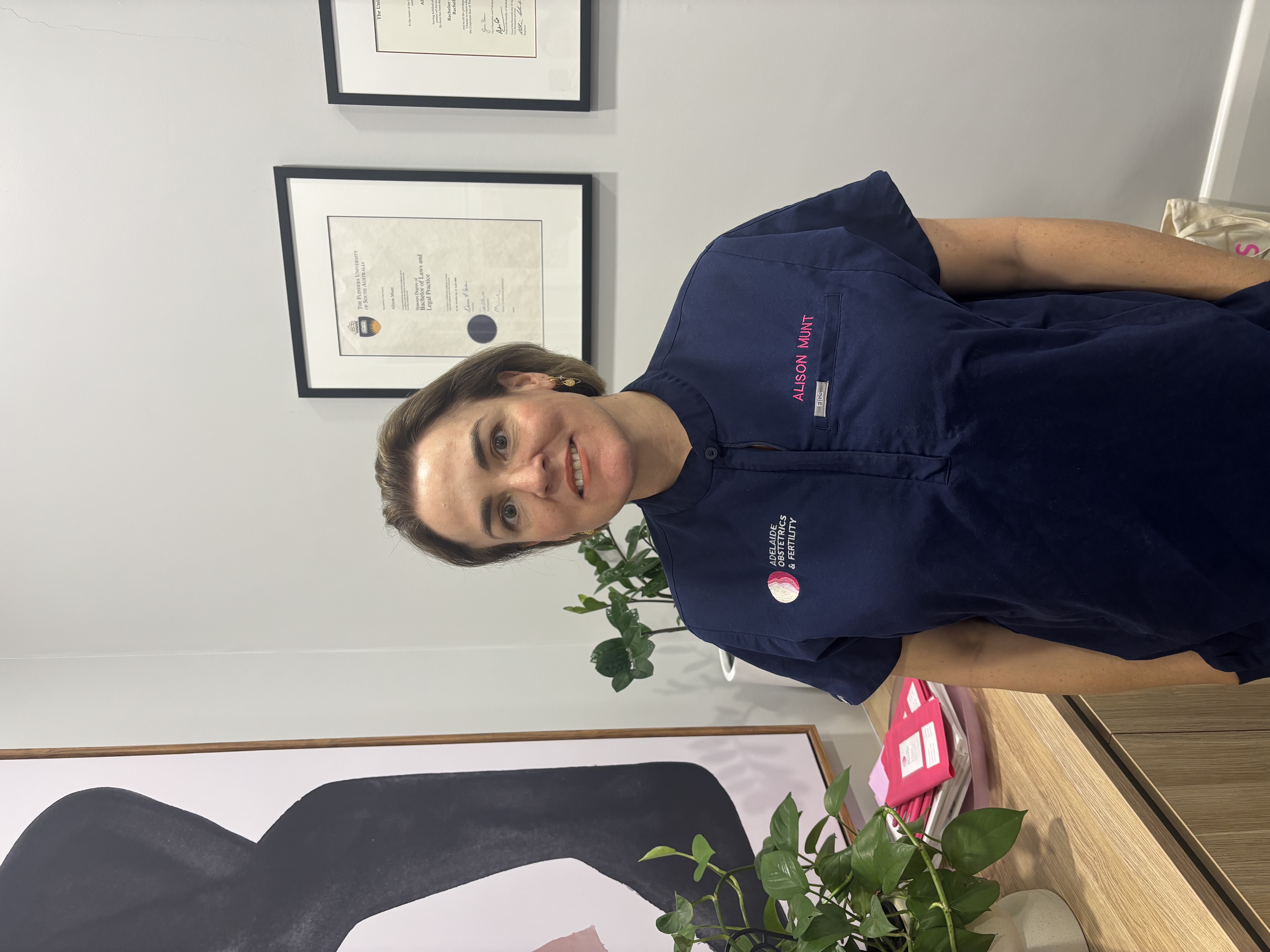
Dr Alison Munt joined the Adelaide Obstetrics & Fertility team in 2013. Born in Adelaide, she completed her medicine degree at the University of Sydney, returning to Adelaide to specialise further in obstetrics and gynaecology within the South Australian public health system. Dr Alison chose obstetrics and gynaecology as a specialty because she wanted to contribute to improving women’s health. Outside of work, Dr Alison enjoys spending quality time with her family and friends. For Dr Alison, one of the great benefits of working in private practice is that she gets to develop a deeper understanding of her patients over time. This translates into a more tailored and individual approach to healthcare. Dr Alison feels strongly that patients should feel as informed as possible. Medical terminology can be very confronting and sound ominous, particularly in women’s health, so it’s important for her to be able to explain what’s going on and present people with clear and informed choices. Dr Alison is always keen to give patients the birthing experience they want, involving both parents and support people. While delivering babies is the obvious joyful part of being a doctor, there’s also the daily reward of helping someone with a gynaecological issue that has been bothering them for some time.