FGM: A Gynaecologist’s Experience Caring for Survivors


 Apple Podcasts

 Spotify
Key Takeaways
- Over 230 million women and girls globally are survivors of female genital mutilation (FGM), with an estimated 100,000 to 200,000 affected in Australia alone.
- FGM is classified into four main types by the WHO, ranging from partial or total removal of the clitoris (Type I) to more extensive excisions involving the labia and infibulation (Types II and III).
- Clinicians must approach FGM survivors with empathy, validation, and a non-judgmental attitude, avoiding anger toward cultural practices while offering safe, trauma-informed care.
- General practitioners should proactively take a trauma history, be comfortable performing basic vulval examinations, and recognize common complications such as recurrent UTIs, painful periods, and dyspareunia.
- Specialized care pathways, including psychological support, pelvic floor therapy, and restorative surgery offered by organizations like Desert Flower South Australia, can significantly improve a survivor's quality of life.
Content note: this episode discusses female genital mutilation, including its physical and emotional effects. Support is available 24/7 through 1800RESPECT (1800 737 732).
More than 230 million women and girls alive today have undergone female genital mutilation (FGM). It’s rarely covered in Australian medical training, yet GPs, emergency doctors, obstetricians and registrars will meet these women, often without realising it.
Orthopaedic surgeon Dr Gavin Nimon talks with Dr Fariba Behnia-Willison, an Adelaide gynaecologist specialising in female pelvic medicine and reconstructive surgery, founder of the not-for-profit Desert Flower South Australia, and a South Australian nominee for the 2027 Australian of the Year awards.
In this episode:
- The WHO definition and classification of FGM (Types I–IV)
- Why the practice continues, and why a non-judgemental approach matters
- Immediate and long-term complications: menstrual problems, recurrent UTIs, dyspareunia, obstetric issues and fistulas
- Antenatal planning and what Australian law allows after childbirth
- Mandatory reporting obligations when a child may be at risk
- A practical approach for GPs: routine trauma history, confident vulval examination, and knowing when to refer
- The role of psychological and social support alongside medical care
Disclosure: Dr Behnia-Willison provides restorative surgery through Desert Flower South Australia and her private practice.
This episode is general medical education for health professionals and students, not individual advice. It reflects one clinician’s approach; practice varies, and may differ from what is taught or offered in your area. Always seek advice from a health professional where you live.
Aussie Med Ed is sponsored by -HealthShare:
- is a digital health company providing solutions for Health Professionals.
🎙️ Proudly Supported By Our Sponsors
Aussie Med Ed is independent and free — made possible by these amazing Australian organisations.
- HealthShare — Australia's health information and referral platform, connecting GPs, specialists and patients. Visit HealthShare
- Avant Medical Defence Organisation — Protecting over 80,000 Australian healthcare professionals. Visit Avant
- eMedici -an Australian-made medical education platform for med students, junior doctors, and IMGs. Visit eMedici.com/MEDED
- Better Medical- GP clinics across QLD, SA, VIC and TAS – offering you the freedom to practise your way, backed by a strong support network. Visit BetterMedical
Thanking the organisations that make Aussie Med Ed possible. Visit our full Sponsors page
Frequently Asked Questions
What is female genital mutilation (FGM)?
According to the WHO, FGM involves any non-medically indicated procedure that cuts or harms female genitalia. It is primarily a cultural practice intended to control female sexuality and ensure marriage security rather than a religious requirement.
How common is FGM in Australia?
While exact figures are difficult to capture due to underreporting and social stigma, an estimated 100,000 to 200,000 women and girls living in Australia are survivors of FGM.
What are the long-term medical complications of FGM?
Survivors frequently experience chronic issues including recurrent urinary tract infections, painful periods, superficial and deep dyspareunia, obstetric complications during childbirth, and psychological impacts like PTSD and depression.
What are a doctor's legal obligations regarding FGM in Australia?
FGM is illegal in Australia. If a clinician suspects or knows that a child has undergone or is at risk of FGM, they have a mandatory obligation to report it to the relevant authorities.
00:00 - Content Warning And Support Lines
02:13 - Acknowledgement And Medical Disclaimer
02:44 - Meet Dr Fareba Benier Willison
04:36 - What FGM Is And Its Types
08:06 - Why FGM Persists In Communities
11:55 - Who Performs It And Early Trauma
15:40 - Childbirth Risks And Legal Limits
19:52 - Long-Term Complications GPs Can Spot
23:51 - How To Ask Without Shame
29:53 - Treatment Options From Basics To Surgery
34:39 - Desert Flower Services Privacy And Advocacy
39:43 - Clinician Takeaways And Where To Get Help
Dr Gavin Nimon:
A quick note before we begin. Today's episode discusses female genital mutilation, including its physical and emotional effects. If that's difficult for you, please look after yourself. Support is available 24 hours a day through 1800 RESPECT or 1800 737 732. Today's guest is Dr Fariba Behnia-Willison, an Adelaide gynecologist who's been nominated for South Australian of the Year in recognition of, among other things, her care and support for women who have experienced female genital mutilation. FGM is rarely taught in Australian medical training, yet many clinicians will see these women without realizing it. I wanted to talk to Fariba about what FGM is, why it continues, and how she approaches caring for the women affected, so the rest of us know what to look out for and how to respond. More than 230 million, that's how many women and girls alive have undergone female genital mutilation, more than eight times the population of Australia. Most were cut as children, many before their fifth birthday, and almost always by people who love them and believe they are doing the right thing. Some of these women are in your waiting room. They book in for cervical screening, for antenatal care, or for urine infections that keep coming back. The question is whether anyone will ask. Today, we explore what FGM is, why it persists, what it means for women's health, and what clinicians can do from a sensitive conversation in general practice to restorative surgery and psychological care. G'day and welcome to Aussie Med Ed. The Aussie style Medical podcast a pragmatic and relaxed medical podcast designed for medical students and general practitioners where we explore relevant and practical medical topics with expert specialists. Hosted by myself, Gavin Nimon, an orthopaedic surgeon, this podcast provides insightful discussions to enhance your clinical knowledge without unnecessary jargon. I'd like to start the podcast by acknowledging the Kaurna people as the traditional custodians of the land on which this podcast is produced. I'd like to pay my respects to the elders, past, present, and emerging, and recognising their ongoing connection to land, waters, and culture. I'd like to remind you that all the information presented today is just one opinion, and there are numerous ways of treating all medical conditions. It's just general advice and may vary depending upon the region in which you're practising or being treated. The information may not be appropriate for your situation or health condition. And you should always seek the advice from your health professionals in the area in which you live. I'm delighted to welcome back Dr Fariba Behnia-Willison. Many of you will remember her from our episode on prolapse and incontinence. Fariba is an Adelaide gynecologist specializing in female pelvic medicine and reconstructive surgery, the founder of FBW Gynecology Plus, a senior consultant at Flinders Medical Center, and a senior lecturer at Flinders University. In 2018, she founded Desert Flower South Australia, a not-for-profit that supports women who have experienced female genital mutilation through restorative surgery, psychological support, and community education. She's been a strong voice for better training of Australian clinicians in caring for women with diverse backgrounds. As always, this is general medical education, not individual advice, and is just the approach to treatment from one individual's perspective. There are numerous ways of approaching all medical conditions and may differ from what is taught or offered in your local area. in the interest of transparency, Fariba provides restorative surgery through Desert Flower and her practice. Fariba, welcome back to Aussie Med Ed It's great to have you back on board, Fariba, to talk about another really important topic, and this time it's female genital mutilation. the number of people affected is really quite disheartening and I thought it was really important to hear about the what it involves, who it affects, and what the treatment options are. I believe you're quite involved in it and the support group and offering treatment for it. Perhaps you can tell me what is the extent of female genital mutilation in the society and around the world? How widespread is it And tell us a little bit about it, please.
Dr Fariba Behnia-Willison:
Sure. Thank you for giving me this opportunity to talk about this very important subject and very close to my heart. 200 million women in the world are survivors of female genital mutilation. Every 16 second, a child is at risk of female genital mutilation. But it is better to start with what's the definition of female genital mutilation. according to the WHO, any intervention or any cutting of the genitalia that is not medically indicated is under the umbrella of female genital mutilation, which is a violation of human right, and it is illegal in Australia and in many countries. However, it is practiced in worldwide, globally. It's not just limited to a certain part of Africa, and it's not a religious matter. So it's very important that we are not judgmental and presumptuous. It is a cultural matter. And when they do this procedure, even though it is hard to believe, it is done with love. It's not done with because they are vicious about children. There are three different types of female genital mutilation. There's a fourth type as well, but three surgical one. all of them involve a clitoridectomy, cutting the clitoris. But I would like to let everybody know that clitoris is much bigger organ than we thought it was especially recent research and anatomies have shown that. And when they do female genital mutilation, it's just the tip of the clitoris that's cut. And then they cover the leftover of clitoris with the clitoral hood when they suture. That is type one. Type two in-- is when the clitoris and labia minora are involved. Type three, which is the most horrific one, is when the labia majora is also involved. Those women have the majority of problem when it comes to a late consequences or late complication associated with this procedure Also piercing and doing tattooing to the genitalia because it's not medically indicated i- is under the umbrella of the type IV or other type of female genital mutilation. So WHO has gone in really hard on this matter. A lot of our women or our young generation compare themselves to pornography. With this, you know, pornography thank God is a, a bit more limited in Australia recently, but it is all photoshopped. Please don't compare yourself with those pictures. The actual people in those porns look differently. If you go to another country and watch the same porn, the woman physiques look very different. So we women have all different types and shapes, and all of us are not defined by just bits and pieces in the genitalia. So, I wanna really tell the ladies with female genitalia issues or those have been cut, if you compare yourself to those porn movies because you don't have any other access to know what's normal, what's not normal, that is not normal either. So don't be disheartened. Come forward, and we can show you the normal anatomy and walk you through it. I really wanna give this message to the society very early on because I don't wanna forget about it, Gavin
Dr Gavin Nimon:
Right. Well, why does it actually occur? I mean, what's the reason for this, this
Dr Fariba Behnia-Willison:
It's a economical matter. So, th-these countries are often money is limited, so they have to pay a dowry towards having a wife, and they want the guarantee for life. They can't go through a divorce. So for example, you pay $5,000 to me as parents to marry my daughter, so you want a guarantee. And by taking away the sexuality of the woman, that guarantee is there. Because if you have painful intercourse, why would you go with another man if if it causes pain or if you have issues or if you have no pleasure? It's when the pleasure comes to play that people have different opinion about different people. And as I said, it is a welcoming ceremony to adulthood and womanhood. In some countries, if a 14-year-old is fallen pregnant and she has not had genital mutilation, they mutilate her before she give birth because she cannot become a mother if she had not the mutilation before giving birth. And you can imagine a woman who is pregnant, if you cut them, how much bleeding might offer. People actually do die at the time of female genital mutilation or can get infected. So it's a welcoming to the adulthood. It's a welcoming to the womanhood. But with more and more availability of social media, the fact that people are connected with other countries and the fact that women have voices and the fact that a lot of actors and actresses have come forward, influential people have come forward and talked about this matter. The fact that you are talking about this matter, so raising awareness about this issue, more and more women are questioning this kind of practice. In Australia currently, we have 100,000 women registered as having female genital mutilation. But we think because it is something embarrassing and people don't talk about it, and we don't take a history, and we don't have a registry, it could be up to 200,000 women in Australia that are survivors of female genital mutilation that are affected by this matter.
Dr Gavin Nimon:
those numbers are terrible is just horrific
Dr Fariba Behnia-Willison:
Yes. Yes. Correct. And these women have urinary tract infection. They go to emergency maybe as a frequent flyers, and nobody thinks about asking this problem. It-- will have a big impact on the national health services. And unless we equip ourselves very quickly, we won't be able to you know, help them and also reduce the cost on Medicare and everything else. And that's why I got into looking into this matter, even though we were not trained in Australia or Germany, where I did my basic training about female genital mutilation. I literally had to teach myself how to deal with this problem.
Dr Gavin Nimon:
All right. Well, given I mean, you've mentioned it's nothing to do with religion, it's actually more of an economic issue. Who's actually organizing this to happen, and what are the immediate and long-term consequences of having this happen to them?
Dr Fariba Behnia-Willison:
this happens funny enough through women. So that is why I am so, into teaching women and educating women, because everything starts from the woman. Every woman carries this baby inside them. So a healthy womb, a healthy mental health, and a healthy education will give us a healthy society. So everything starts from women, and I wanna give the power back to women. Doesn't matter how paternalistic our society is, you have the power of education, and you are the one that can change the society. So, women take the other children for this procedures, depends where they live. In, in certain countries, the-there is no one that is well-equipped. It is just a barber or a grandmother who, that has done multiple cutting, and they just might use any kind of instrument to do this procedure. The child might even not get any local anesthesia. It is cut, sutured, and hopefully the child doesn't get tetanus, doesn't get infection, doesn't get bleeding, and survives. And then you can imagine that child will have trust issues, will have forever not wanting anybody to touch them, and so on. And then after that is a celebration that they have undergone that procedure. But the way they present it, it is love, and it is really important. If we are going to be judgmental we are not going to help this group of women, just accept that is a part of the culture and we have gently educate them and undo this part of the culture without undermining the whole culture or questioning the whole culture. That's just one little thing that is not appropriate. And in Australia, this kind of procedures are illegal, and if you see someone with this condition that they have gone to the birth country and have come back and the child undergone FGM, you have to report it as much as we report the sexually transmitted diseases. It is up to us doctors. Or if you suspect someone in the community has done that, this is a reportable matter. Otherwise you get into trouble. The other possibility is that they go to medical centers. For example, you can go in Malaysia and have in the hospital have this done. Well, obviously less risk of infection, less risk of death and bleeding, but still depending what kind of FGM was performed it has different consequences immediately after operation short-term and long-term. But the trust issue and depression and PTSD will be all the way through the life of this woman. This woman perceive pain and discomfort differently to any other woman because of the trauma that they have gone through at the early childhood where they have to be nourished and nurtured and loved. The very early problems are especially when they get into periods painful periods. They have if the outflow of the vagina is very tight, sometimes the blood cannot come out of the vagina and can retrograde bleeding happen inside the pelvis and they are at higher risk of endometriosis which affects ten percent of women globally, but in this group of women it is higher. They have more pelvic pain, they have more pain during the intercourse and at the time of childbirth it is much harder for them to give birth vaginally because their scar tissues are not as strong as the normal tissue and they can't expand and sometimes the vaginas can explode. And you have to understand the FGM to help these women and to basically cut them in a way that the outlet is bigger or more in a normal way for the child-- for the baby to be delivered and not ex- exploded. And just putting that vagina back together sometimes could-- be very difficult because perineum is fine, we can repair it, but the type with the clitoris or labia when it is torn, in Australia we are not allowed to suture that back because we are performing FGM. So it is a very fine line how to walk through that path and you have to be doing it in a very culturally sensitive manner otherwise you will be offending them and sometimes it can affect their relationship if you just leave them like it is because sometimes aesthetically it doesn't look good. So you have to be very careful that you send them to the centers who know what is legal, what is illegal, and how that can be repaired.
Dr Gavin Nimon:
Right. Okay. So that's obviously at the time of vaginal delivery in a patient who's suffered from a female genital mutilation. Does that mean they're more likely to encourage a cesarean section in those patients then
Dr Fariba Behnia-Willison:
we don't. If the birth is happening normally, then we don't push them into cesarean section. N- but we allow them to have vaginal birth, but repairing it after the vaginal birth is really important, and it needs really very good skilled surgeon to put that back together
Dr Gavin Nimon:
And episiotomy has to be performed carefully and has to be obviously the con- the consent procedure prior to the birth will obviously be really important as well
Dr Fariba Behnia-Willison:
very-- there is a lot of talking beforehand. There is a lot of discussions beforehand how we are going to do it. The de-infibulation and the cutting of the clitoral hood and labia to the normal anatomy will be discussed. And we basically show them some kind of material how we are going to do it, which way we are going to do it, which support will be available. And it is done ve-very carefully and antenatally rather than everything in the labor room
Dr Gavin Nimon:
What percentage of children actually suffer some se-serious immediate consequences at the time of FGM? You've mentioned that some may even pass away from blood loss. I mean, there must be other risks of of severe infection at the time requiring hospitalization. how many people are actually affected by that in the initial stages as well?
Dr Fariba Behnia-Willison:
This is very hard statistic to come up with because obviously in those countries, there is not enough registry and there is not enough publications regarding these matters. It's more Western countries who came across globalization and across this group of women that there are some studies being done. But the systematic reviews involving 17 FGM papers showed that these women are at higher PTSD, at higher depression and pain perception, especially if they have type III FGM. So I don't really know the numbers of how many immediately have a problem, but we know that death and hemorrhage and severe infections are likely to happen after the within 24 hours of the procedure.
Dr Gavin Nimon:
Really? This is horrific If we go onto the long-term effects apart from the psychological and the issues that can occur during obstetrics, I believe, I think we were talking prior about the risk of urine infections and also the risk of fistulas and things that can occur as well. is that more common in the different types of FGM and what should a GP be aware of to look out for in that scenario?
Dr Fariba Behnia-Willison:
So, if these women are giving birth not in the settings that we have in Western countries, often these women can have obstructed labor. So the baby is stuck in the birth canal for hours and hours, so the tissue in the vagina get necr- necrotic, and eventually the baby either dead or alive comes out because the tissue gives up. And that is when the risk of fistulas happen. So the woman can be incontinent with urinary tract or can be with fistulas fecal incontinence due to the bowel fistulas can happen. And you can imagine that these patients have no chance to stay at home. They are really ostracized, and that is the worst thing that can happen to a woman, and that's why that beautiful couple from Australia run the fistula clinic in Ethiopia. And there are a lot of lovely colleagues here who do fistula repair but it is a hard surgery to do, and the best thing is prevention of that. So if a woman says that she has fecal incontinence, take that seriously and refer them to colorectal surgeon. That's not something that the gynecologist deal with it. Or if you do a vaginal examination and you see when they cough that the urine doesn't come out of the urethra, but it comes out of the vagina, that's also a fistula. Please refer them. We probably don't see them in Australia that much because of the active prevention and active way of delivering these women and attending to these women and not allowing the obstructive labor for too long. However, still the, the fistulas can happen and despite doing everything and just examination and careful history-taking will point us towards those complications. One thing that is really most common is painful intercourse. And these women have been robbed from their sexuality as a early age. But when their menopause comes on the top of it, then the vaginal dryness, the dryness of the scar causes more problem. And the one question that you can ask, does intercourse hurt at the penetration, at the opening of the vagina or when the penetration is completely happen? Is it deep dyspareunia or superficial dyspareunia? If it is superficial, probably is related to the scar and related to the dry vagina and the symptoms of genitourinary symptoms. So, these kind of questions are very important, and sometimes when couples don't have intimacy, they fall apart and the woman gets depressed. And I had men who have come to my office and have said, "I think my wife has affair because she doesn't wanna have sex with me anymore." And it was when I told them that she's is in pain and that's why she cannot have intercourse, then the men start to cry because they feel bad that they have thought all this bad thing about their wives and, but they are actually the victim of some kind of hormonal issues. So conversation and approaching this issue with openness and not being shy about it and not making a taboo subject is the only way forward.
Dr Gavin Nimon:
obviously there's different processes for treating a patient who survived this procedure. How would you try and classify the treatment pathways? I mean, obviously there's psychological there'll be physical aspects. What are your sort of techniques or processes in actually addressing someone in this? And how would a GP who comes across a patient who's undergone a female genital mutilation how would they approach it too? What would be their sort of Checklist sheet. they should follow?. Dr Fariba Behnia-Willison: To take the anger of a caregiver is the most important step in the treatment because they are angry for all of us. So they don't need our anger on the top of their anger because as soon as they see we are angry with their culture, they are worried, "Okay, how am I going to integrate into this culture?" They need our care. And what I have done, I have changed my template when it comes to sexuality and women's health. I ask every single person, "Have you had any trauma to your vagina?" And you will be surprised how many women who didn't have FGM come up with something that they had some kind of trauma to the vagina as a child with a bicycle, with falling from the tree, with having some- somebody physically assaulting them or sexual insult and so on. So it is a good part of the history-taking to say, "Have you had any sexual trauma? Have you had any cutting or have you had any trauma to your vagina?" And when you ask every single person, then you don't come judgmental to the patient because they see that you have a template that you are ticking, and this is just one of the other things that you have to ask. And at the time of pelvic floor examination, I have another clause there. If there is anything anything that you haven't disclosed but you don't wanna have vaginal examination, please bring to our attention because we are a part of the team, and we wanna take care of you. We don't want to cause any stress. So we get people to read it and tick it, and we ask the question, and we get the answer from them. So that is the first thing that you do. Second thing is awareness of this problem, that there are familiarize yourself with vulva. It is hard to talk about vaginas for many surgeons many GPs and registrars because I don't know why somehow the vagina has not made it in the medical books 100%. To me, the vagina is another orifice, and that is something that has to be examined. And if you don't, you are negligent. So, as simple as that. I don't have any other way to put it. A woman deserves a holistic approach, and you have to be as a GP, comfortable and confident to have a look and to do the basic stuff in terms of taking a swab, doing a pap smear, and so on. You can't say, "I don't do pap smear." You have gone through medical school. You should be able to do a vaginal examination because 50% of women basically, population of this world. So, yeah examination and knowing what's the clitoris, what is the labia minora and what is the labia majora is very important that you understand it and you know what the normal anatomy is and what's the abnormality. There is a lot of resources available that you can look at. You can look at our charity website, Desert Flower South Australia. You can call the center on 82972822 and get all the information and refer the patients if you can't do anything. The smallest things that you can do is have the suspicion and think that this person needs help and refer them. This is the minimum that you can do. It doesn't cost you anything. It is duty. It is no negotiation. If you don't know how to do, then refer, and we take it from there. And when the patient comes to us, remember it takes a lot of effort for them to come forward. Now remember, these people are migrants. Migrants take up to five years to find their feet with language and with everything else when they move. Doesn't matter where you go and what you do, m-migration is a hard thing to do. And when they are in the process of that and disclosing to you that they have been cut is it takes a lot more effort. And if they do it, don't spoil it for them. Just take the opportunity and ask more question and be in their team. Show that you care. Don't pretend because they can see it. Show that you care, and if you can't, you say, just be honest. Say, "Look I have not a lot of information on this or a lot of edu-education. I'll refer you to this center, and this center can help you." So-- And often they just wanna be validated. They just wanna tell you that they didn't choose to be in this position, that they were children and that was put upon them. And close your eyes for a second if you have a daughter or someone that you love, and imagine that was done to them, and how you would have felt as a father, as a mother, or as a sister. So just put yourself in their shoes and just imagine, and then come with that emotions. That's what they need, the care, the loving care. And just validate their pain. And often that's all they need. They want somebody else to know that has happened to them. And it is like a placebo effect, 50% feel better already, and you don't need to do anything. But then they might go away two years later and come back and say, "Okay, now I have got sexually active, and I have pain." And you say, "Okay, there are things that we could do." Things can, that we can do is basic vulva care, which is, you know, don't wash yourself with too much of soap. You know, some women are just too aggressive with washing and cleaning and perfumes and all of that. That's bad. The G-strings are the worst thing that ever has happened to women. Cotton underwear. Don't wear any undies at night. Have a nightie and sleep or during the day, if you can avoid underpants, that would be the best. But, you know, basic stuff. If they are a bit, you know, atrophic or post-menopausal, we put them on a bit of estrogen cream. Estrogen cream, I give it to every woman. Sometimes women even with breast cancer are hesitant, but the absorption is so little that I think you can try it for a short time just to push them a bit further, and then we can manage them with other stuff. In my clinic, I use a lot of PRP And to soften the scar. There are certain kind of modalities, energy-based modalities that can thin the scar and it has to be taken care because of the type of skin that these women might have. Might not be that the normal skin types that we work with, and it has to be a center who understands the energy levels for different type of skin. And we can also, you know, do minimally invasive surgery and fat grafting to basically expose the clitoris. And when we expose the clitoris surgically I inject the PRP in the shaft of the actual clitoris. And then with testosterone cream that we put on daily basis on the top of the clitoris, we can grow the clitoris. So some women who take testosterone so they might get clitoromegaly because the cl-clitoris has the potential to grow. For these women, we grow the clitoris to the normality with testosterone cream. And for example, the patients that I have, they are female genital mutilation s-survivors, they met an Australian man or a man from a culture where they don't have this kind of procedures. They wanna be normalized, so we do use fat grafting, and we recreate the labia for them. And we do a little bit of minimally invasive surgery to expose the clitoris. I probably had 100 cases so far, and we have done about 20 reversal. and we had 10 that also had the cosmetic surgery on the top of that, So the numbers are not huge, but getting them through the door is actually difficult. So, a lot of them, as I said, when they come, they just wanna be validated. A lot of them come because they have period issues and urinary tract issues, and when we rectify those symptoms, then they don't wanna have another surgery because they are traumatized by the n-initial cutting. So, not a lot of people go on to have a reversal but a lot of people come forward for basic stuff that we do. We also work with PsychMed and they do our psychological support. We have social workers who help with the social work, and my girls at the reception, they are all very passionate, and they all walk the patient through it. We don't necessarily make it a gynecological setting because we don't want people the communities to be aware that a person is coming to this center and so on. We take the survivors through a cosmetic setting so that it is diluted, and it is protective of the patient. So we go above and beyond to make the privacy 100% and also to protect them because they are going against something in their, community. So I remember when it very first started, I got some nasty phone calls. But it was up to me to be um, uh, scared and step back or to say, "Nah. Here is Australia. You can't do this to us, and the law is on my side. The police is on my side, and I'm not scared of you. I am providing care, and that's what I do." And now the community is really supportive. People are really supportive. People talk about it. People message us and the whole thing has changed because we consistently showed them care and no judgment, and support. obviously you're based in South Australia. There are other services around Australia and also internationally that do similar work as Yes. Yes. Yes. The biggest one is in Austria and Germany, the actual Desert Flower Center. And that was by the actress that was from Somalia, that is stopped being an actress and went into United Nation and supported women's right. She was a big voice and created the Desert Flower Center. When I was asked by No FGM organization to be a voice for these women in 2018 we threw a gala dinner for my daughter's 21st birthday and we had a lot of positive response. 400 people came, and they supported the cause. Unfortunately, No FGM doesn't exist anymore. But then I thought,"Okay, we go to Germany. We'll go and learn the technique that they do." We acquired the name and the constitution, and we came back to South Australia and basically did the Desert Flower South Australia. We couldn't go Desert Flower Australia because a flower company had taken it up. And now a, a lot of women for, from all over the- country come to us for this matter. I had a SBS interview. I had a lot of radio interview for awareness. We have a Instagram and Facebook, also a LinkedIn that we put material on basically talk about this matter. when I was talking on- Adelaide Radio the other day, they said that's first time that somebody talks about vaginas on the radio in such a open way, and I was really proud. That is what we have to do. We have to be able to talk about this, all this subject. So to all these women who are listening to me FGM doesn't define you. You are much more than that. That is just an unfortunate thing that has happened to you, and you are in a safe place. And let's let's stop FGM with these survivors. Let's help you to go through life, and let's educate the younger children and the younger mothers that shouldn't happen to their children. So reach out to those women. Don't be scared. The law is on your side. I am on your side. You have us, and we can teach you how to approach the subject in a sensitive way with your community. And you don't need to fear. You are now Australian flowers, and you are here to blossom, bloom, and add to this culture, add to this country which you are calling your home. And I am certainly a migrant, and I have been given a lot of opportunities here, and I wanna give hundredfold back to this country. Let's do it together. that's brilliant. That's absolutely brilliant. Is there anything else you think that the registrar or medical student should know about this scenario that you'd like to bring forward to us today as well,
Dr Fariba Behnia-Willison:
if anybody wants more information, you're more than happy to come and talk to us one-to-one. We run workshops if you are interested to come. I am happy to take you through vaginal examination and how to do Pap smear and so on. We have workshops for that. We have a lot of women who are happy to allow me to educate you with their body and take this opportunity. We are here to educate, to elevate our knowledge. Other colleagues have done it for me. I am happy to do it for you. You can come to theater with me and observe the surgeries that we do and understand what we use. You can see the cell therapy that we do with these women. So you talk with knowledge and you have seen it. If you are not able to come, just contact us It doesn't matter which part of the world you are there. I am always happy to connect via WhatsApp. I am always available. I am more married to my phone than my husband. So don't hesitate to ask questions, and if I can be helpful in any ways, I will now I will also help you over the phone how to treat these women, how to go forward, because this is something that is very close to my heart and I wanna leave a legacy. So, don't hesitate to contact us. Help is available. Refer. If you can't do anything, refer because we can do something
Dr Gavin Nimon:
Oh, that's brilliant. As I say to my registrars you live on forever in the thoughts of other people, and this is what you're providing, and I'm sure people will remember you forever. So thank you very much, Fariba, for talking about this really important issue. Thank you very
Dr Fariba Behnia-Willison:
thank you for having me, Gavin, and thank you for the lovely work that you do for all the GP's, registrars, and men and women in this world. Fantastic work. Congratulations.
Dr Gavin Nimon:
thank you very much. My sincere thanks to Dr Fariba Behnia-Willison for her expertise and for the women she speaks for. If you're a clinician, the take home is simple: ask gently and privately with a professional interpreter if needed, respond without shock, and know where to refer. As always, this is general medical education, not individual advice, and is just the approach to treatment from one individual's perspective. There are numerous ways of approaching all medical conditions and may differ from what is taught or offered in your local area. If you're a woman who has experienced FGM, help is available. Support services include 1800 RESPECT Thanks for listening to Aussie Med Ed




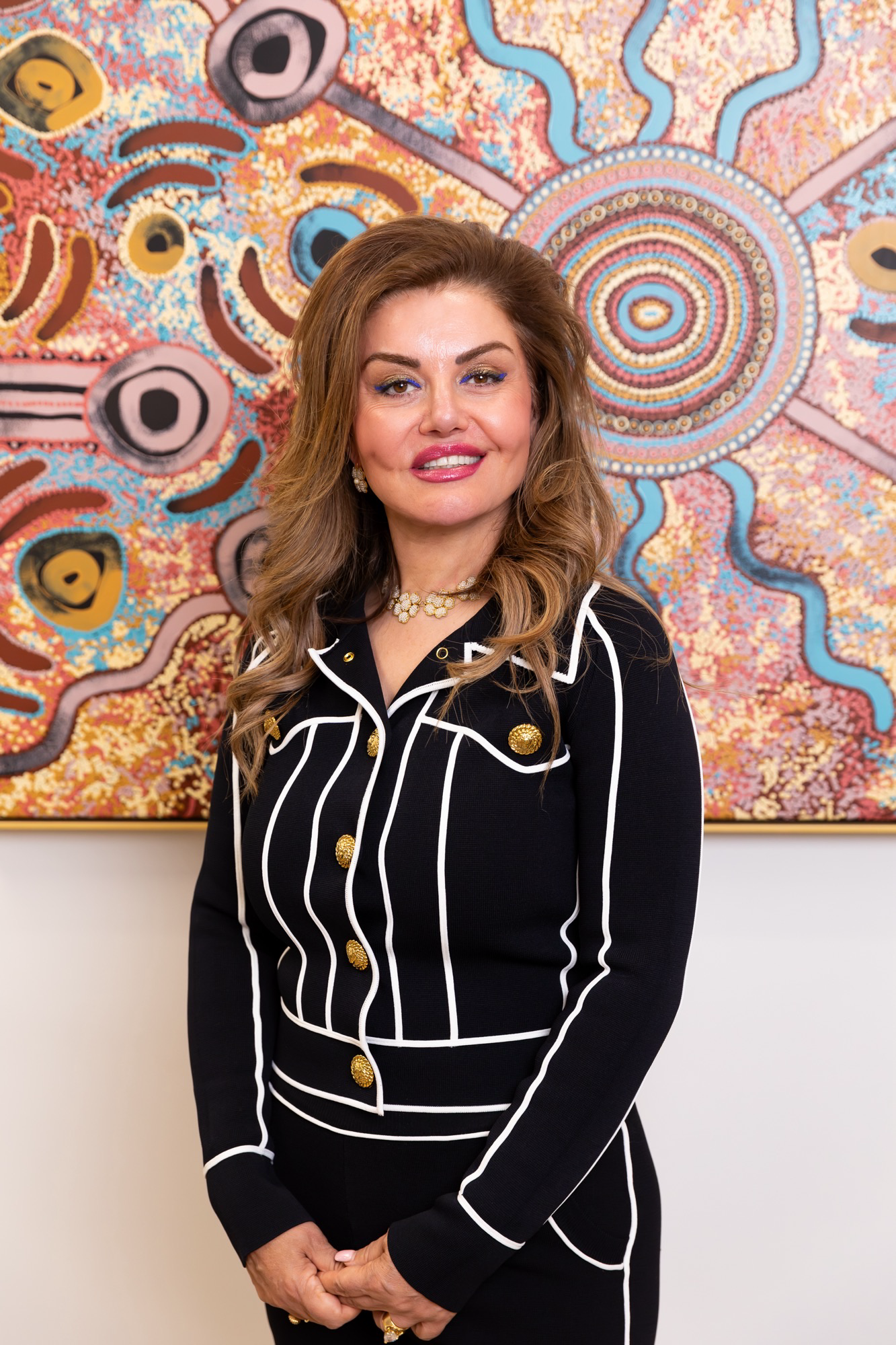
Dr Fariba Behnia-Willison
Dr Fariba Behnia-Willison's work sits at the intersection of surgical practice, research, and community impact.
An Iranian-Australian endo-gynaecologist specialising in pelvic floor medicine, reconstructive surgery, and advanced laparoscopy, she is the founder of FBW Gynaecology Plus and SmartFem and co-founder of Desert Flower South Australia, providing holistic care and support to survivors of FGM and trauma.
Throughout her career, Fariba has seen the profound, often under-recognised impact of gynaecological conditions on women’s health, dignity, and quality of life, shaping her commitment to advancing treatment, awareness and pathways of care for women historically overlooked.
Her work spans clinical care, research, and innovation, including the TGA-approved Victoria Graft System for pelvic floor reconstruction, alongside advocacy for equitable, patient-centred women’s healthcare.
A multi-award-winning clinician and innovator, Fariba continues to bridge medical innovation and lived experience.